Recent News
-
Is an International School Fee Worth It? What You Actually Get for the Money
 October 8, 2026
 -
How a Well-Designed Boarding Experience Supports Life Skills and Confidence
September 25, 2026 -
What Makes a Boarding Environment Supportive for Academic and Personal Growth
September 19, 2026 -
How Structured Daily Routines Prepare Students for Independent Living
September 15, 2026 -
How Everyday Campus Experiences Help Students Develop Leadership Skills
September 10, 2026 -
Choosing a Residential School That Blends Academic Rigor with Holistic Development
August 26, 2026 -
How Global Curricula and Boarding Facilities Prepare Students for International Success
August 18, 2026
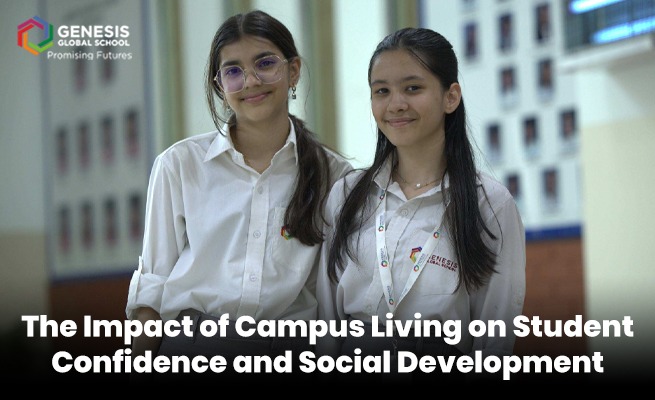
The Impact of Campus Living on Student Confidence and Social Development
Introduction:
Campus living, particularly at boarding schools, offers students an enriching environment that fosters both personal and academic growth. Away from home, students learn to manage their daily lives while developing social skills and gaining the confidence to face future challenges. At Genesis Global School, the Top 10 Boarding Schools in Delhi, students experience a unique blend of independence, community living, and structured support that significantly impacts their confidence and social development.
About Us:
Campus living at Genesis Global School greatly enhances students’ confidence and social skills. By immersing themselves in a diverse and supportive residential environment, students engage in meaningful social interactions, build strong friendships, and practice effective communication. Living away from home encourages them to step out of their comfort zones, embrace challenges, and develop a sense of belonging. These experiences foster emotional maturity and self-assurance, making them better equipped to navigate the complexities of adulthood.
Boosting Confidence through Independence
Living on campus allows students to take responsibility for themselves in a way that is not possible in a traditional day-school setting. Boarding school students learn to manage their time, organize their academic and personal life, and handle the various responsibilities that come with living away from home. This fosters a strong sense of independence, as students are responsible for completing their tasks without the daily presence of parents or guardians.
Strengthening Social Skills and Emotional Intelligence
Campus living provides students with ample opportunities to interact with peers from diverse backgrounds, fostering strong interpersonal relationships. Unlike traditional school environments, where interactions may be limited to classroom time, boarding schools create a community where students live, study, and participate in activities together, leading to more frequent and meaningful interactions.
Building Friendships and Support Networks
One of the most significant social benefits of campus living is the lifelong friendships students form during their time at boarding school. Living in close quarters with peers creates a unique environment for bonding, whether through shared academic experiences, extracurricular activities, or simple day-to-day interactions. These friendships often last well beyond the time spent at school, providing a strong support system that students can rely on throughout their lives.
Developing Leadership Skills
Boarding schools provide students with numerous opportunities to take on leadership roles. Whether serving as prefects, captains of sports teams, or leaders of clubs, students are given the responsibility to lead others and make decisions that impact their peers. These leadership experiences are invaluable in building student confidence.
Enhancing Teamwork and Collaboration
Living on campus means that students must constantly collaborate with others. From working together on group projects to participating in sports, arts, or social events, students in boarding schools often find themselves in team-oriented environments. These experiences teach them how to collaborate, communicate effectively, and compromise when necessary.
Improving Adaptability and Resilience
Adapting to life on campus, away from home, teaches students valuable lessons in resilience. They learn to cope with homesickness, new social dynamics, and academic pressures. Overcoming these challenges strengthens their ability to adapt to different situations, fostering a sense of emotional resilience.
Conclusion:
The impact of campus living on student confidence and social development cannot be overstated. Boarding schools provide an immersive environment where students develop not only academically but also socially and emotionally. By fostering independence, encouraging social interaction, and providing leadership opportunities, campus living plays a pivotal role in shaping students into confident, resilient, and socially adept individuals. These experiences not only contribute to their growth during their school years but also lay the foundation for success in higher education and beyond. Residential schools equip students with the skills needed to navigate the complexities of life with confidence, empathy, and leadership, making them better prepared for the future.
FAQs:
-
How does living on campus help build student confidence?
Residential living encourages students to take charge of their day-to-day responsibilities, which boosts self-confidence and prepares them for adult life. -
What social skills do students develop in a boarding school?
Students in residential schools develop essential social skills like communication, empathy, and teamwork by interacting with peers from diverse backgrounds. -
How do boarding schools enhance emotional development?
Residential schools offer a supportive environment where students can manage homesickness and other emotional challenges, strengthening their emotional resilience. -
How do campus activities contribute to social development?
Activities like sports, arts, and group projects foster collaboration and build social skills by bringing students together to achieve common goals. -
Are boarding schools better for shy students?
Yes, the close-knit community and supportive faculty in residential schools help shy students gradually build confidence and social connections.
How does campus living affect a student’s academic growth?
The structured environment of campus living allows students to focus on their studies, develop self-discipline, and manage their academic responsibilities