Recent News
-
Is an International School Fee Worth It? What You Actually Get for the Money
 October 8, 2026
 -
How a Well-Designed Boarding Experience Supports Life Skills and Confidence
September 25, 2026 -
What Makes a Boarding Environment Supportive for Academic and Personal Growth
September 19, 2026 -
How Structured Daily Routines Prepare Students for Independent Living
September 15, 2026 -
How Everyday Campus Experiences Help Students Develop Leadership Skills
September 10, 2026 -
Choosing a Residential School That Blends Academic Rigor with Holistic Development
August 26, 2026 -
How Global Curricula and Boarding Facilities Prepare Students for International Success
August 18, 2026
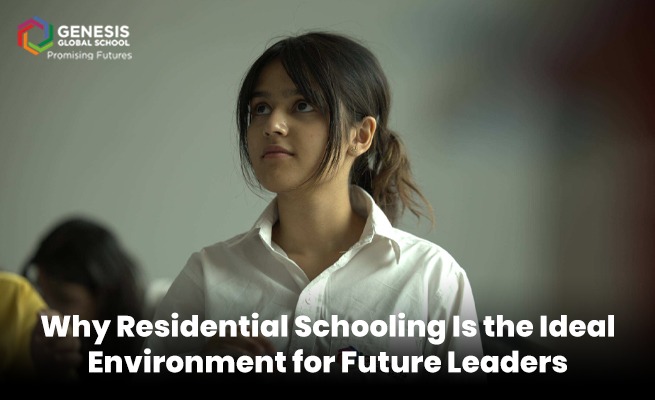
Why Residential Schooling Is the Ideal Environment for Future Leaders
Introduction:
In the dynamic and competitive world we live in, preparing future leaders requires more than just traditional academic learning. It necessitates a well-rounded education that fosters independence, resilience, leadership skills, and a global perspective. At Genesis Global School, one of the Top Boarding Schools in Delhi, residential schooling provides the ideal environment for students to develop these essential qualities. By immersing students in a structured yet flexible living and learning environment, residential schools help nurture the leaders of tomorrow.
About Us:
Residential schooling at Genesis Global School is designed to nurture future leaders. Our campus-based learning model provides a blend of academic rigor, extracurricular activities, and life skills development. By living and learning together, students develop collaboration, empathy, and problem-solving abilities—key traits of successful leaders. With a focus on holistic growth, leadership training, and global exposure, Genesis prepares students to become responsible, confident leaders who can navigate complex challenges in the future.
The Foundation of Leadership: Independence and Responsibility
One of the most significant benefits of residential schooling is the development of independence. Unlike day schools where students return to their home environment after classes, residential schools provide students with the opportunity to live away from home, teaching them to manage their own daily routines. They become responsible for their own academic schedules, personal hygiene, and social lives. This independence plays a critical role in the development of leadership qualities, as students learn to take initiative, solve problems, and manage challenges without constant supervision.
Cultivating Leadership Skills through Practical Experience
Leadership is not just a theoretical concept but a skill that must be honed through practice. Residential schools offer numerous opportunities for students to take on leadership roles. Whether it’s serving as a head of a student council, a sports team captain, or a leader of various extracurricular clubs, students are constantly challenged to lead and inspire their peers.
Developing Social Intelligence and Teamwork
Residential schooling is also an environment where students can cultivate strong social skills. In a boarding school, students live in close proximity to peers from diverse backgrounds and cultures, which provides them with a unique opportunity to interact with a broad spectrum of individuals. These daily interactions teach students the importance of empathy, active listening, and understanding different perspectives.
Nurturing Resilience and Problem-Solving Abilities
One of the essential characteristics of effective leadership is resilience. Boarding schools often present students with challenges, from living away from home to adapting to a new academic and social environment. The ability to overcome obstacles, cope with stress, and bounce back from failure is crucial for future leaders. Residential schools foster this resilience by providing students with the opportunity to confront and manage challenges head-on, whether it’s overcoming homesickness or balancing academic pressure.
A Holistic Approach to Personal Growth
A key feature of residential schooling is its emphasis on holistic development. Residential schools provide an environment that balances academics, sports, extracurricular activities, and character-building experiences. Students engage in physical activities such as sports and arts, which teach them discipline, time management, and teamwork. They also have access to various extracurricular opportunities, including leadership training programs, community service projects, and global exposure activities.
Conclusion:
Residential schooling offers an ideal environment for developing the qualities that define effective leaders—independence, responsibility, resilience, social intelligence, and a global perspective. The structured environment, combined with opportunities for leadership roles, social interaction, and extracurricular activities, allows students to develop essential skills that will serve them well in future endeavors. Boarding schools are not only focused on academic success but also on producing well-rounded, confident, and capable individuals who are prepared to lead in an increasingly complex world. For students with aspirations of becoming future leaders, residential schooling provides a nurturing yet challenging environment that helps them realize their full potential.
FAQs:
-
What makes residential schools ideal for developing leadership?
Residential schools offer numerous opportunities for students to take on leadership roles, helping them gain practical experience in managing teams and projects. -
How do residential schools teach responsibility?
Living on campus means students must manage their academic and personal lives, which teaches them responsibility and prepares them for future leadership roles. -
What leadership programs do residential schools offer?
Many boarding schools offer leadership programs, including student government, sports teams, and community service, where students can practice their leadership skills. -
How does the diversity in residential schools contribute to leadership growth?
Interacting with peers from different backgrounds helps students develop empathy, problem-solving skills, and global awareness—key traits of effective leaders. -
Are students in residential schools more prepared for leadership roles?
Yes, the structured environment and leadership opportunities in boarding schools ensure students develop the skills they need to lead with confidence. -
How do residential schools foster both personal and academic growth?
Boarding schools provide a balanced environment where students can excel academically while also developing strong personal and leadership skills.