Recent News
-
Is My Child Ready for Boarding? 7 Honest Signs to Look For
 October 20, 2026
 -
What Should a Parent Look for in a Report Card Beyond Marks?
October 14, 2026 -
Is an International School Fee Worth It? What You Actually Get for the Money
October 8, 2026 -
How a Well-Designed Boarding Experience Supports Life Skills and Confidence
September 25, 2026 -
What Makes a Boarding Environment Supportive for Academic and Personal Growth
September 19, 2026 -
How Structured Daily Routines Prepare Students for Independent Living
September 15, 2026 -
How Everyday Campus Experiences Help Students Develop Leadership Skills
September 10, 2026
Inside High-Performing Residential Campuses: What Parents Should Observe
Introduction:
Choosing a residential school is one of the most significant decisions parents make for their child’s future. Beyond brochures and rankings, it’s essential to understand what truly defines a high-performing residential campus. At Genesis Global, the Top Boarding Schools in Delhi NCR where parents should look beyond academics and focus on the environment, systems, and values that shape a student’s overall development.
About Us:
Genesis Global School is committed to creating exceptional residential learning environments that support holistic growth. Our vibrant campus life blends academic rigor with enriching extracurricular activities, including music, dance, art, and a wide range of sports. Through structured mentoring and regular events like talent shows, scientific expos, and annual sports meets, students cultivate resilience, teamwork, and confidence.
A Well-Structured Academic Ecosystem
At the heart of any high-performing residential campus is a structured yet flexible academic framework. Parents should observe how learning is delivered—whether it promotes conceptual clarity, critical thinking, and curiosity rather than rote memorization. Effective residential schools integrate classroom learning with real-world applications, encouraging students to explore, question, and innovate.
A strong focus on continuous assessment, personalized attention, and academic mentoring is often a key indicator of institutions aligned with the boarding schools.
Student-Centered Residential Life
Residential life plays a crucial role in shaping independence and responsibility. Parents should pay close attention to how students manage daily routines, personal responsibilities, and time management. High-performing campuses provide structured schedules that balance academics, activities, rest, and self-reflection.
Quality of Pastoral Care and Emotional Support
Academic excellence thrives when emotional well-being is prioritized. Parents should observe the systems in place for student care, including mentoring programs, counseling support, and teacher-student relationships. High-performing residential campuses ensure students feel heard, supported, and emotionally secure.
Focus on Character and Values
Beyond grades and test scores, values-based education is a hallmark of effective residential campuses. Parents should look for emphasis on integrity, empathy, respect, and social responsibility. Daily interactions, community living, and shared responsibilities create opportunities for character building.
Students who grow up in such environments are more likely to become responsible citizens and ethical leaders, making value-driven education a key factor in high-performing residential institutions.
Balanced Exposure to Sports and Creative Activities
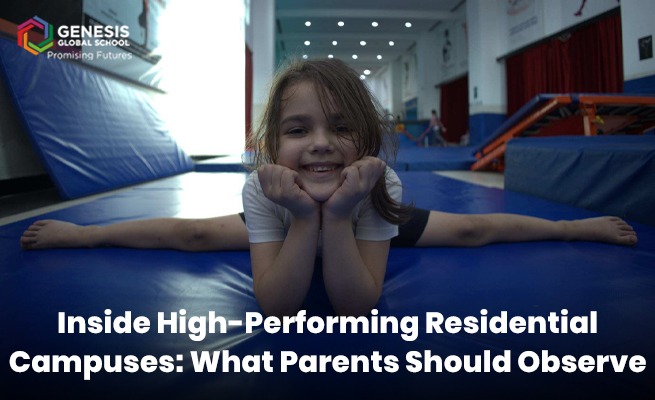
High-performing campuses recognize that learning extends beyond academics. Parents should observe the availability and integration of sports, arts, and extracurricular activities within the residential schedule. Participation in these activities enhances teamwork, leadership, creativity, and physical well-being.
The boarding schools often prioritize holistic development by ensuring students have equal exposure to academics and co-curricular pursuits, helping them discover and nurture their unique strengths.
Safe and Stimulating Campus Infrastructure
A well-designed campus significantly impacts student growth. Parents should assess the quality of hostels, classrooms, libraries, sports facilities, and recreational spaces. A secure, clean, and thoughtfully designed environment promotes focus, comfort, and safety.
Leadership Opportunities and Student Voice
Leadership development is a strong indicator of a residential campus’s quality. Parents should observe whether students are encouraged to take on leadership roles through student councils, house systems, clubs, or community initiatives. Such opportunities empower learners to take responsibility, collaborate with peers, and develop decision-making skills.
Teacher Engagement Beyond Classrooms
One of the unique advantages of residential schooling is extended teacher-student interaction. Parents should observe whether educators are actively involved in mentoring, supervising activities, and guiding students beyond academics. This deeper engagement fosters trust and allows teachers to understand each student’s strengths and challenges.
Preparing Students for Life Beyond School
Ultimately, the goal of residential education is to prepare students for future challenges. Parents should look for programs that emphasize life skills such as communication, adaptability, problem-solving, and time management. Exposure to diverse perspectives and experiences helps students become confident, independent individuals.
Conclusion:
High-performing residential campuses are defined not just by academic results, but by the quality of experiences they offer every day. From structured learning and emotional support to leadership opportunities and holistic growth, these institutions create environments where students thrive independently.
For parents evaluating options among the boarding schools, observing these key elements can provide valuable insight into choosing a residential campus that truly supports long-term success.
FAQs:
-
What should parents notice first on a residential campus?
Student engagement, discipline, and overall campus culture are key indicators. -
Why is a balanced daily schedule important?
It ensures equal focus on academics, activities, rest, and personal growth. -
How does campus life affect student behavior?
A structured environment encourages responsibility, confidence, and self-discipline. -
What role do extracurricular programs play?
They support holistic development and help students discover individual strengths. -
Why is mentoring important to observe?
Strong mentoring ensures emotional support and academic guidance beyond classrooms.
6. How does campus safety impact learning?
A secure environment allows students to focus fully on growth and learning