Recent News
-
Is My Child Ready for Boarding? 7 Honest Signs to Look For
 October 20, 2026
 -
What Should a Parent Look for in a Report Card Beyond Marks?
October 14, 2026 -
Is an International School Fee Worth It? What You Actually Get for the Money
October 8, 2026 -
How a Well-Designed Boarding Experience Supports Life Skills and Confidence
September 25, 2026 -
What Makes a Boarding Environment Supportive for Academic and Personal Growth
September 19, 2026 -
How Structured Daily Routines Prepare Students for Independent Living
September 15, 2026 -
How Everyday Campus Experiences Help Students Develop Leadership Skills
September 10, 2026
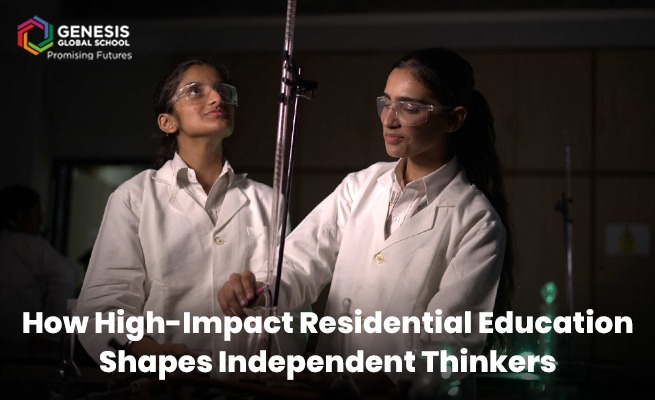
How High-Impact Residential Education Shapes Independent Thinkers
Introduction:
In today’s rapidly changing world, academic knowledge alone is no longer enough to prepare students for real-life challenges. Parents increasingly seek learning environments that foster independence, confidence, and strong decision-making abilities. At Genesis Global, the Best Boarding Schools in Delhi where high-impact residential education stands apart. Residential learning models are designed to nurture self-reliant individuals who are ready to thrive academically, socially, and emotionally.
About Us:
Genesis Global School fosters holistic development through a balanced blend of academics and residential life. With well-structured schedules, personalized mentoring, and a nurturing environment, learners are guided to become confident, independent thinkers. Beyond the classroom, students engage in vibrant extracurricular activities like sports, performing arts, and leadership workshops that sharpen life skills. Regular events such as inter-house competitions, cultural fests, and talent showcases encourage exploration and self-expression. At Genesis Global School, every student is empowered to thrive academically, socially, and emotionally, preparing them for a future of informed choices and self-reliance.
Learning Beyond the Classroom
One of the most defining features of residential education is that learning does not end when classes are over. Students live within a structured academic ecosystem where lessons extend into daily routines, interactions, and experiences. This constant engagement encourages students to take ownership of their time, responsibilities, and learning goals. Over time, they develop the ability to manage schedules, balance academics with activities, and make informed choices independently.
Developing Responsibility Through Daily Structure
Living away from home naturally instills a sense of responsibility. From managing personal belongings to adhering to daily routines, students learn accountability at a young age. High-quality residential institutions focus on age-appropriate independence, allowing students to gradually take charge of their actions while providing guidance and mentorship when needed.
Encouraging Critical Thinking and Self-Expression
Residential education places strong emphasis on interactive learning rather than rote memorization. Classroom discussions, project-based learning, and collaborative assignments encourage students to question, analyze, and form opinions. Outside the classroom, debates, leadership opportunities, and creative platforms give learners the confidence to express ideas clearly and thoughtfully.
Emotional Growth Through Community Living
Living within a diverse student community helps learners understand different perspectives, cultures, and viewpoints. Daily interactions teach empathy, adaptability, and emotional intelligence—skills that are just as important as academic success. Students learn to resolve conflicts, build friendships, and support peers, all of which contribute to emotional maturity.
This sense of community plays a significant role in shaping independent thinkers. When students feel emotionally secure and supported, they are more likely to explore ideas, take initiative, and develop confidence in their abilities.
Leadership Opportunities That Build Confidence
Residential schools offer numerous leadership roles through student councils, house systems, clubs, and team activities. These platforms allow students to take initiative, lead peers, and make decisions that impact the larger community. Leadership experiences teach responsibility, accountability, and strategic thinking.
Such opportunities are a hallmark of the boarding schools, where leadership is not limited to a select few but encouraged across all age groups. Students learn that leadership is about problem-solving, collaboration, and ethical decision-making.
Balanced Exposure to Academics and Life Skills
A high-impact residential education model ensures that academic excellence goes hand in hand with life skills development. Time management, teamwork, resilience, and adaptability are embedded into daily life. Students learn to handle challenges independently, whether it’s managing academic pressure or adjusting to new responsibilities.
Preparing Students for a Global Future
Residential education prepares students for global exposure by fostering adaptability and cultural awareness. Many institutions aligned with the boarding schools focus on global learning perspectives, communication skills, and ethical values. Students become comfortable stepping out of their comfort zones, an essential quality in an interconnected world.
Conclusion:
High-impact residential education goes far beyond academics. By offering structured independence, emotional support, leadership opportunities, and holistic growth, it shapes students into confident, self-reliant individuals. The immersive environment encourages learners to think critically, act responsibly, and grow independently.
It is this comprehensive development approach that places residential education at the forefront of modern learning and continues to make it a defining characteristic of the boarding schools.
FAQs:
-
How does residential education promote independence?
Living on campus helps students manage time, responsibilities, and decisions on their own in a guided environment. -
Why does residential learning encourage critical thinking?
Daily problem-solving, discussions, and real-life situations push students to think beyond textbooks. -
How do activities support independent learning?
Sports, arts, and clubs allow students to explore interests and make choices confidently. -
Does residential life improve decision-making skills?
Yes, structured freedom helps students learn accountability and informed decision-making. -
How does peer interaction shape independence?
Community living teaches collaboration, adaptability, and confidence through shared experiences. -
Are independent learners better prepared for the future?
Students develop resilience and self-reliance needed for higher education and life beyond school.